Your bag is empty.
The 'Call Me by Your Name' author on sexual labels and the ever-changing nature of desire

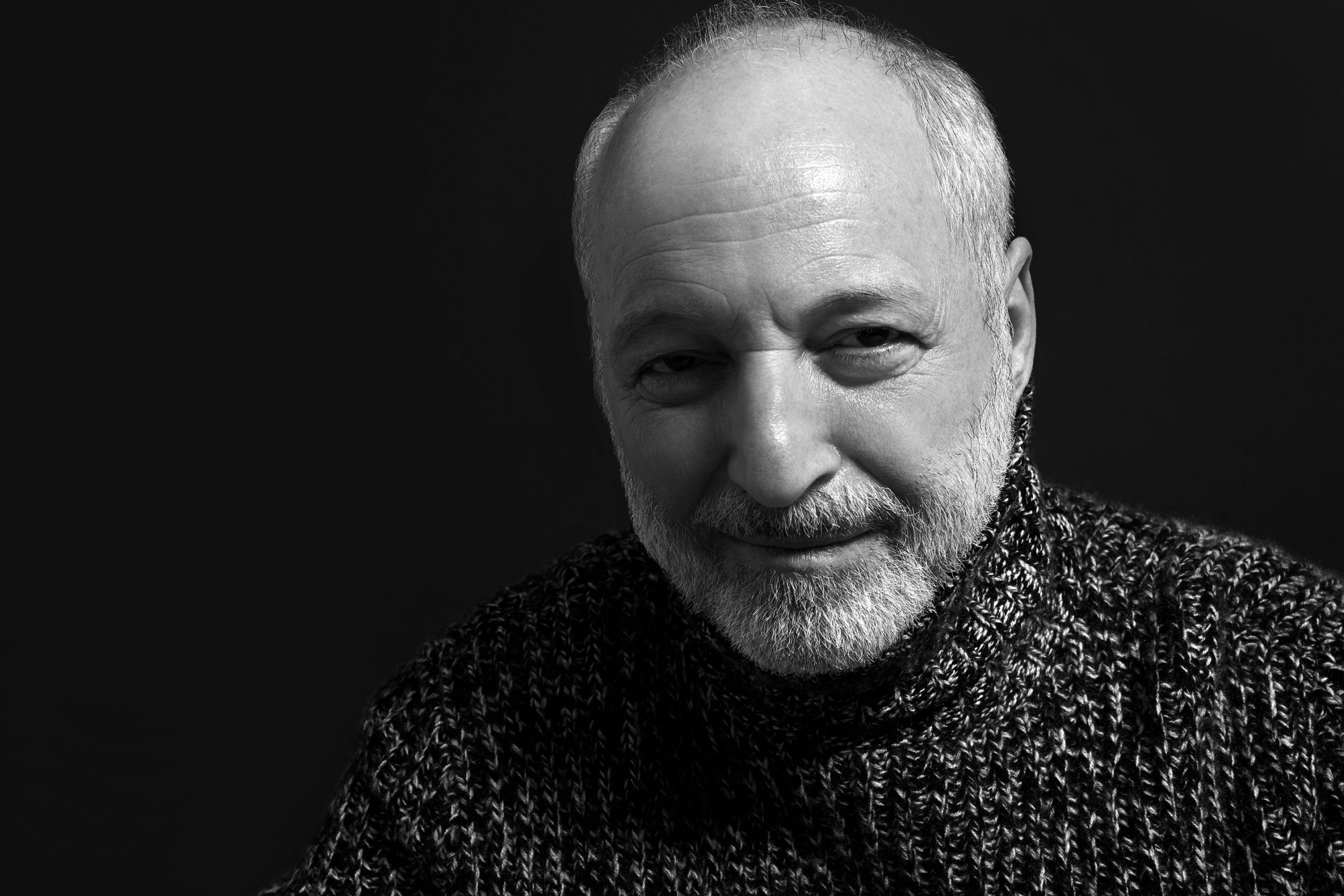
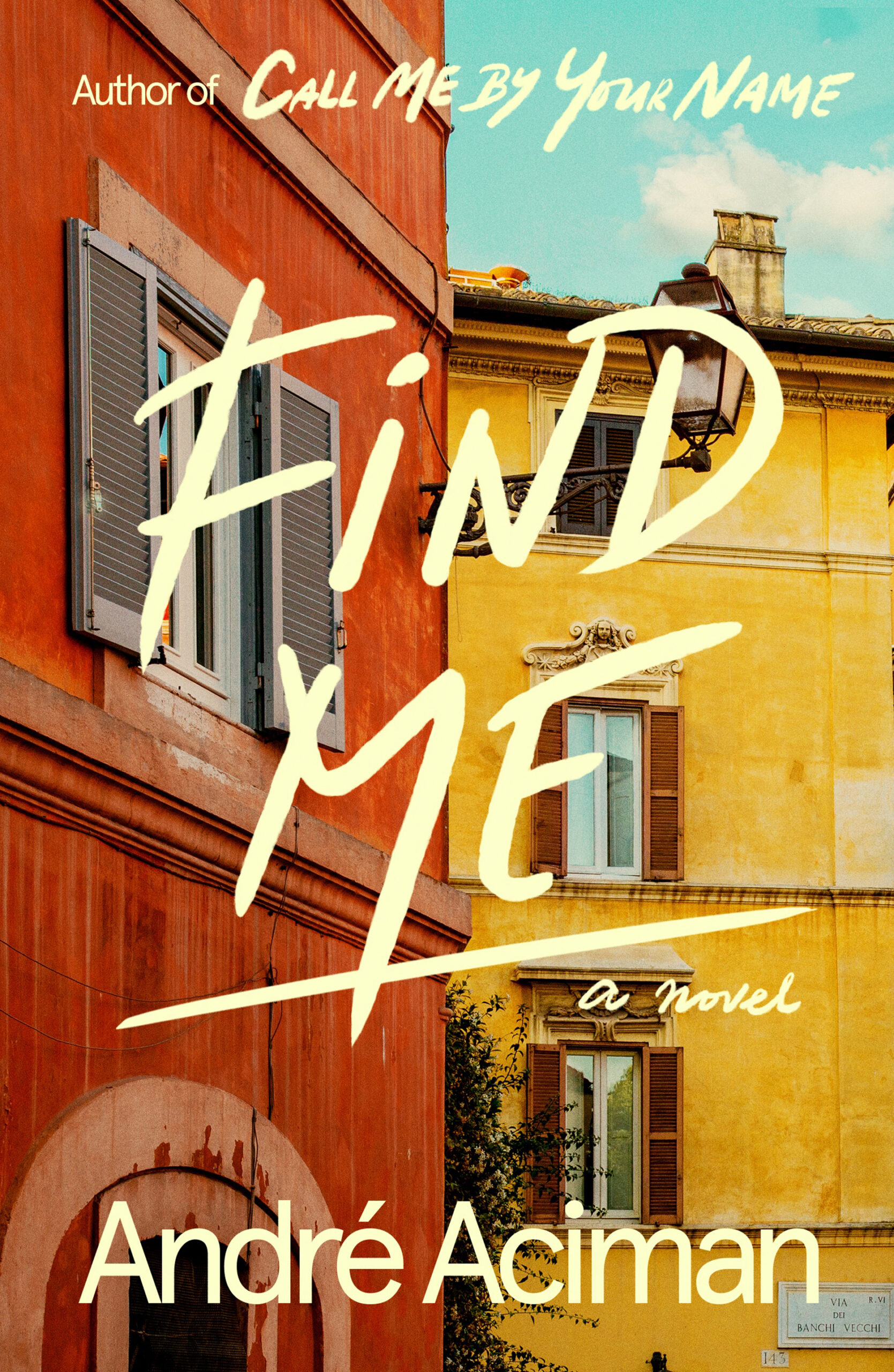
Nuanced depictions of desire are a hallmark of writer André Aciman’s novels; his meditations on yearning are especially attuned to the erotic. Call Me by Your Name, his best-known work and his fiction debut, features a summer romance between Elio and Oliver, two young men who also enjoy sleeping with women. (It was adapted to much acclaim in a 2017 movie of the same name.) In Find Me, Aciman’s highly anticipated sequel, longing and non-normative sexual attraction are again major themes.
Just weeks before Find Me’s release, I interviewed Aciman, creator of perhaps the most beloved bisexual characters of the 21st century. In the empty, mirrored café of his Berlin hotel, we talked about expectations, boundaries, sexual fluidity and more. I ask why he doesn’t write sexual desire as a fixed phenomenon, as so many other authors do.
“It’s so boring!” Aciman says. “I find it limiting.
“My whole life has been advocating for total fluidity—not just sexual, but political, nationality-wise, religious-wise, professionally. I believe people are transient.”
People don’t talk about it as *bisexual*, do they? They want to see it as a love story or a gay story.
His personal history reflects this adaptable approach: An American today, Aciman was born in Egypt and raised there until his mid-teens, when his family was exiled in an anti-Semitic wave, moving to Italy and then to New York City a few years later. He is Jewish and “hates religion.” He has worked as a stockbroker, in advertising and lately in academia. Because he has a wife, some pinned him as a straight man. But such thinking is restrictive. As Aciman once said, “A lot of people believe they’re totally heterosexual or gay. I’ve never been one or the other.”
Complex characters who are attracted to more than one gender, like those brought to life by Aciman, feel all too scarce in American literature. Though Call Me by Your Name features characters who fancy both men and women, reviewers and critics frequently labeled it a “gay story.”
“People don’t talk about it as bisexual, do they?” Aciman says. “It’s amazing. They want to see it as a love story or a gay story.”
This phenomenon—the erasure or elision of bisexual or sexually fluid characters—is nothing new. The 2005 hit Brokeback Mountain “was almost unanimously hailed as a gay cowboy story, although it could more accurately be described as a bisexual shepherd story,” says Meg-John Barker, co-author of Life Isn’t Binary, a nonfiction book on nonrigid thinking that came out this year. Similarly, the 2013 French film Blue Is the Warmest Color was often stamped a lesbian story, though the female protagonist is sexually fluid. Even Aciman, who says he doesn’t want himself or his characters to be “cordoned off as this or that,” sometimes refers to Call Me by Your Name as “gay.”
“We’re culturally mired in the gay-straight binary,” Barker says by e-mail from their studio in Brighton, England. “We see this when celebrities mention attraction to more than one gender and the media announces they’re gay now. Sexual attraction is not a same-opposite binary. Sexuality is fluid and multidimensional.”
Another progressive aspect of Aciman’s rendering of desire that is generally overlooked is that his characters participate in open relationships without the conflict or strife that often attends such portrayals. In Call Me by Your Name, Elio and Oliver have other lovers effortlessly. Elio explains that it “never” occurred to him to hide from Oliver his relationship with Marzia, an old friend with whom he was sleeping—they had “total transparency.” He didn’t suffer unbearable jealousy when he thought of the women Oliver was having sex with—“it made [him] hard.” One romantic interest doesn’t diminish another. As Elio puts it: “Bakers and butchers don’t compete.” Similarly, in Find Me, Oliver flirts with and fantasizes about his two crushes, Erica and Paul, at a party in the home he shares with his wife, and later that same evening, piano music evokes his longing for Elio.
Because erotic fluidity and open non-monogamy don’t fit the dominant relationship paradigm (the monogamous straight or gay couple), they aren’t adequately represented in arts and culture. This has helped give rise to negative tropes about bisexuals as deceitful, confused or going through a phase.
“Few mainstream depictions ever truly acknowledge that a person can be attracted to—or love—more than one person without that being a problem,” says Barker, who edited one of the first academic volumes on open non-monogamy.
Despite a lack of representation, open relationships and sexual fluidity are becoming more common. A U.S. study found that one in five single adults has had an open relationship at some point in their lives, and a U.K. survey found that 43 percent of 18- to 24-year-olds experience attraction as somewhere between “exclusively heterosexual” and “exclusively homosexual.” People are finally catching up to what pioneering sexologist Alfred Kinsey, himself bisexual, declared more than half a century ago: “Males do not represent two discrete populations, heterosexual and homosexual. The world is not to be divided into sheep and goats.”
In both Call Me by Your Name and Find Me, nonbinary sexuality is not a matter for interrogation; it simply is. Elio and Oliver’s sexuality is not discussed. There’s no dramatic coming out for either of them. Their desires are organic, accepted, unquestioned. Aciman was criticized by some for Call Me by Your Name’s lack of explicit sexual politics, but the portrayal was quietly transgressive: Openly non-monogamous romantic fluidity isn’t a sensationalized plot point but a matter-of-fact depiction of desire. Queer stories without antagonists—a hostile community, an unaccepting parent, the deadly threat of HIV/AIDS—are all too rare.
Aciman wants to transcend sexual identity, to unmoor desire from gender in favor of sensuality or love.
“I like to fly over what all people who are interested in identity issues are riveted to,” Aciman says. “The one thing a writer hates are terms, because they automatically label you. And when you label, you limit.”
“Even bisexuality becomes a kind of limiting term,” Aciman says, “because it means you’re interested in both men and women, but I’m also—as in [my novel] Enigma Variations—interested in both simultaneously: polyamory.”
I suggest that perhaps by avoiding labels, Aciman wants to transcend sexual identity, to unmoor desire from gender in favor of sensuality or love.
“Yes. Remember the moment when Oliver makes fun of the peach scene?” Aciman says, referring to the infamous Call Me by Your Name passage in which Elio is intimate with a stone fruit. “When [Oliver] says, ‘You tried human; now you’re going for plant. I suppose mineral comes next?’ It’s exactly what I was talking about!”
Find Me picks up years after the young men’s affair, and the focus is initially on Elio’s father experiencing an unexpected rekindling of passion. The original tone of the first book’s unreserved acceptance of emotional and physical appetites remains: “Sexuality is intimacy in its profoundest way,” Aciman says.
This depth of intimacy continues in Find Me, in which characters’ desires remain unchained from “either/or.”
It’s a refreshing approach—one our culture seems finally ready for.
Find Me by André Aciman is out October 29 from Farrar, Straus and Giroux.