Your bag is empty.
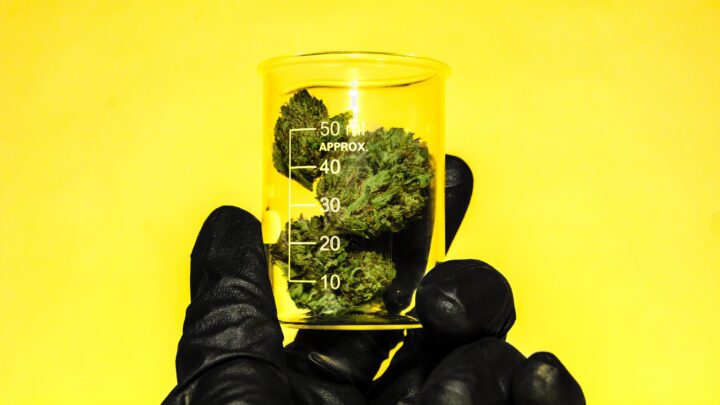
PLAYBOY takes a closer look at the Colorado politician and his role in decriminalization
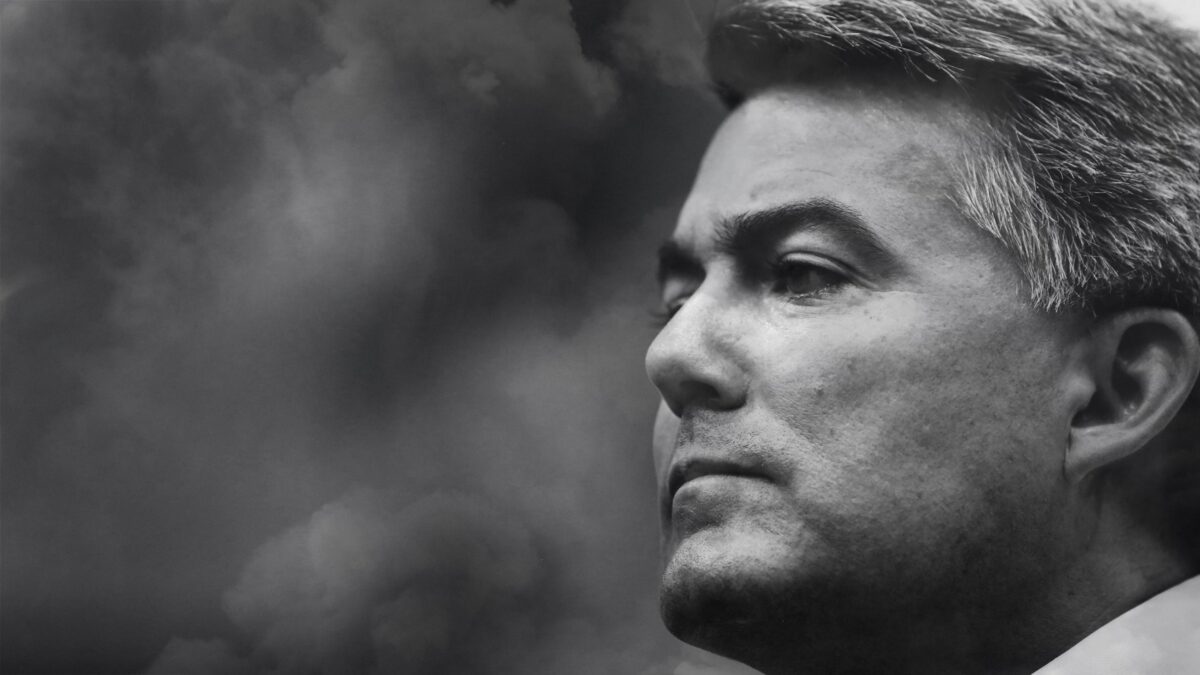
President Donald Trump’s a notorious teetotaller who despises the substances many Americans enjoy daily, which based on his track record looks to include cannabis. And while Senate Majority Leader Mitch McConnell helped legalize CBD last year, he still steadfastly opposes weed. But both Trump and McConnell have one thing in common that could bode well for advocates: They’ll do almost anything to maintain a Republican majority in the Senate. And cannabis legalization—or the lack thereof—could prove pivotal in deciding the outcome of next year’s Colorado Senate race.
Those dynamics make embattled Colorado Sen. Cory Gardner the potential cannabis power broker in this Congress. By most accounts, he’s arguably the most vulnerable Republican senator on the ticket in 2020. While he opposed his state’s 2012 recreational marijuana ballot initiative, since then he’s sensed the tides turning and has become one of the louder Republicans on Capitol Hill advocating for normalization—under the “state’s rights” mantle; not the progressive “this is some antiquated racist BS” perspective—after voters of all stripes have voiced disdain for the failed War on Drugs.
Still, a myriad of cannabis bills – about 40 notable ones are floating around the 116th Congress alone – have sat untouched by Senate Republican leaders. But there seems to be a thawing in the party over the sticky green plant that millions of Americans now legally consume. And cannabis proponents wonder if GOP leaders may allow long stalled cannabis bills to move as a cynical ploy to try and keep Gardner in one of the few truly purple states left in the nation.
“He knows his reelection is definitely tied to getting success on the cannabis issue,” Michael Correia, director of government relations for the National Cannabis Industry Association, tells PLAYBOY.
This summer Gardner testified on behalf of the Secure And Fair Enforcement (SAFE) Banking Act. The legislation would allow cannabis businesses in states that have legalized either medicinal or recreational marijuana to access the banking industry despite the lingering federal prohibition on the plant.
“This is a difficult hearing. A difficult topic, I know that. But we were sent here to deal with difficult topics,” Gardner testified back in July. “It’s an important step forward, the first hearing we’ve had on this issue as the federal government wakes up to the reality that the cannabis issue is not going to go away and we must have action.”
We have shifted the window to no longer discussing if we’re going to end prohibition but how we’re going to end prohibition.
Since then the U.S. House of Representatives resoundingly voted to pass the legislation. While that veto proof vote of 321-103 shows that most House lawmakers disagree with Gardner and no longer view this issue as “a difficult topic,” still the Senate has yet to take up the popular bill.
After the hearing, Senate Banking Chair Mike Crapo of Idaho—a Mormon who’s no fan of cannabis but who surprised many advocates for even holding the hearing —told me he’s had a change of heart on whether or not to provide cannabis businesses equity in the banking sector.
“I look forward to working with Sen. Gardner on that,” Crapo told PLAYBOY.
When I asked Gardner about the issue, he was uncharacteristically hopeful, chipper and even eager to discuss cannabis—an issue he’s often all but run away from my questions on for years now.
“I’m confident that we’ll find a solution to move,” Gardner told PLAYBOY, even as he denies the debate has anything to do with maintaining his Senate seat.
“It’s nothing about elections, it’s all about policy and the right thing to do for the state,” Gardner said in yet another brief interview in the Capitol.
While Gardner usually tries to avoid talking cannabis policy, he’s still been a louder advocate for it than other perpetually vulnerable Republican senators from states that legalized weed for recreational consumption, like Sens. Lisa Murkowski of Alaska and Susan Collins of Maine. Part of that is the nature of Colorado’s electorate—where even Democrats have libertarian vibes, let alone the state’s large numbers of Independents and Republicans.
That makes getting the federal government out of locally legal cannabis businesses a huge issue in Colorado’s junior senator’s upcoming campaign.
“Gardner definitely knows in his reelection he’s going to need issues where he can work across the aisle and say that he’s independent and he can get things done – and this is one important issue,” Correia of the National Cannabis Industry Association contends.
It seems Gardner has known that for some time. Back in 2018, he teamed up with progressive presidential candidate Elizabeth Warren on the STATES Act, which would end the federal prohibition on weed by allowing states to decide their own cannabis policies. It’s a measure Gardner reports even getting Trump to sign off on in their private discussions. Trump has publicly hinted at supporting it, though it’s something his administration hasn’t moved on.
But times have changed since the STATES Act was dropped. Back then Jeff Sessions was attorney general and had just repealed the Obama-era Cole Memo, which was the federal government’s main promise to cannabis businesses that they weren’t going to send DEA and FBI agents in to disrupt marijauna companies.
Since then Sessions was booted from his post by Trump, and the current attorney general, Bill Barr, says he’s fine with allowing states to take the driver’s seat on weed (even if he personally opposes it). So, while it was once newsworthy, the STATES Act is now almost passé.
“Is it as important now? No, not really,” Correia says.
But is the STATES Act potentially able to be politically packaged to help Gardner and the GOP retain his coveted Senate seat? That’s a different question altogether.
What Gardner campaigned on in 2014 to narrowly win this race is not what Coloradans have seen from him in the Senate, and they’re fed up with that.
“If Mitch McConnell or President Trump or someone wants to give Cory Gardner a victory, could that be a vehicle? Yeah, it could be a vehicle – along with the SAFE Banking Act,” Correia says. “They’re the two bills out there that are really ready to go and could become the first ones to move, and that would definitely help Gardner.”
While helping decriminalize cannabis at the federal level remains a priority for lawmakers of all stripes—let alone for the 62 percent of Americans who tell PEW Research Center they support legalization—the goal posts have moved.
Sen. Cory Booker (D-N.J.)—a presidential contender who’s arguably been the Senate’s most outspoken and forward-thinking member on drug policy—refused to sponsor Gardner and Warren’s STATES Act when it was re-introduced in the 116th Congress earlier this year.
While Booker was a sponsor of their bill in the 115th Congress, he says times have changed and he can no longer support legalization efforts that don’t include robust provisions explicitly aimed at helping the minority communities left blighted in the wake of the devastating war on drugs. Cannabis advocates have noticed that Booker doesn’t seem to be alone.
“If you listen to the rhetoric that Sen. Warren is talking about on the campaign trail, when she talks about marijuana, she doesn’t mention her own bill,” Justin Strekal, the political director for the pro-cannabis advocacy group NORML, tells PLAYBOY. “She talks about the provisions in other bills that are out there that she’s supportive of.”
That includes Warren’s desire to now expunge the criminal records of past marijuana felons, which isn’t included in her and Gardner’s STATES Act. Her office said she wasn’t available for an interview for this piece. That may be because the writing’s on the wall: As prominent members of her party have moved past her bill, she seems to have as well.
“We have shifted the window to no longer discussing if we’re going to end prohibition but how we’re going to end prohibition,” Strekal says. “Largely, the Democratic Party and more and more Republicans are coming around to recognizing the need to provide relief for those who have suffered under criminalization.”
Still, even as other lawmakers have moved beyond the STATES Act, Gardner and his camp remain firmly behind the legislation.
“Senator Gardner’s STATES Act is a commonsense proposal he has been pushing for years because it is good for Colorado,” Jerrod Dobkin, communications director for Gardner’s 2020 Senate campaign, texted PLAYBOY. “He has worked with his colleagues to move the conversation further on this subject than any other senator, and he will continue to push for reforms. Just like other policies he has advocated for over the years he is doing this because it will benefit Colorado.”
But Gardner’s running for reelection in Colorado, which is arguably the most progressive state in the nation on pot policy. So while Democrats in the state won’t pick their Senate candidate til next year, they’re unlikely to revert back to sending a prohibitionist to represent them in Washington. That makes cannabis a central component in the general election even before Gardner knows who he’s going toe-to-toe with.
“They’re likely to have, when it comes to marijuana policy, two great candidates on the ballot,” Strekal says.
Strekal notes that even applies to the most high-profile member of Colorado’s Democratic Senate primary field: The state’s former governor, John Hickenlooper, who hopped in the race after ingloriously bowing out of his party’s overcrowded presidential contest. Like Gardner, Hickenlooper opposed the state’s 2012 ballot initiative, but he seems to have had a conversion on the issue of late.
“Now if you look at the rhetoric that he has espoused during his presidential campaign, we had to do a double take as to whether or not we’re talking about the same John Hickenlooper,” Strekal says.
Colorado Democrats don’t seem too worried that scoring a GOP-orchestrated win in Washington on cannabis can tilt the election in Gardner’s favor.
“What it really comes down to is that he broke his promise to be an independent senator and instead is a knee-jerk partisan,” Alyssa Roberts, communications advisor for the Colorado Democratic Party, tells PLAYBOY.
“What Gardner campaigned on in 2014 to narrowly win this race is not what Coloradans have seen from him in the Senate, and they’re fed up with that.”
Roberts says that extends to Gardner’s failed promises on cannabis too.
“Cory Gardner talks a big game but is short on results, and we see that repeatedly, with public lands and all sorts of issues and I think [marijuana] is another example of that, and it isn’t going to help salvage his struggling reelection bid,” Roberts says.
Senate Majority Leader Mitch McConnell’s office didn’t respond to a request for comment from PLAYBOY. And Trump’s campaign sent me to the White House for comment, which also didn’t even bother to respond to my inquiry.
But polling shows cannabis is popular across all voting blocks, and it’s proved to be a winning issue in many races nationwide – including in Colorado.
Shad Murib was policy director for now Colorado Gov. Jared Polis’ successful 2018 gubernatorial bid after serving as his legislative director on drug and cannabis issues back when Polis served in the House. When PLAYBOY asked if Polis’ progressive stance on cannabis played a part in his 2018 gubernatorial victory, Murib didn’t hesitate in gushing over how important the plant was to helping propel his former boss into the governor’s mansion.
“Oh, tremendously. The constituency of small business owners and people who care about the issue from a medical perspective is overwhelming and then you have the recreational aspect—which people in Colorado don’t like the government getting in their way too much,” Murib says. “That constituency is pretty powerful politically now.”
That isn’t lost on McConnell and his top generals, like Senate Banking Chair Crapo, and it also doesn’t seem to be lost on Trump who’s also looking for ways to win Colorado in his own 2020 contest. But for now, even as House Democratic leaders are promising to move on a host of cannabis measures after passing the SAFE Banking Act, they all are destined to die in McConnell’s Senate.
That is, unless the GOP leader suddenly sees the light. And for now, Gardner’s re-elect seems to be the brightest star shining on the western horizon for Republicans.