Your bag is empty.
Forty years ago, six icons of queer America took center stage at the world’s hetero mecca
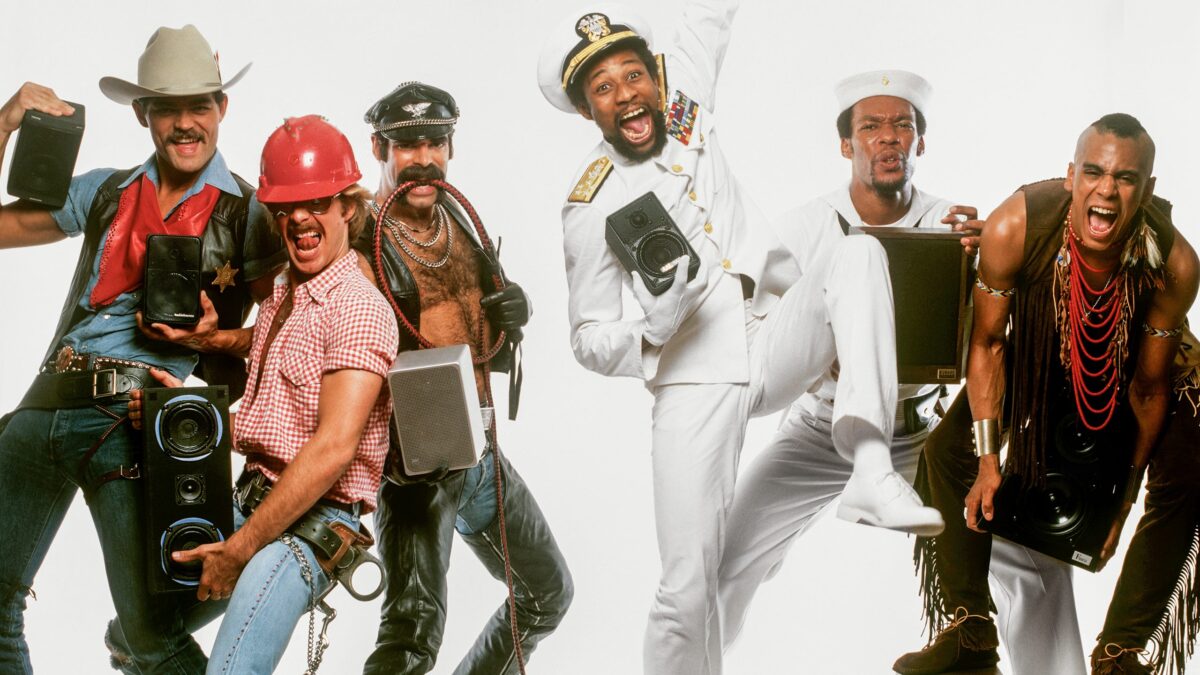
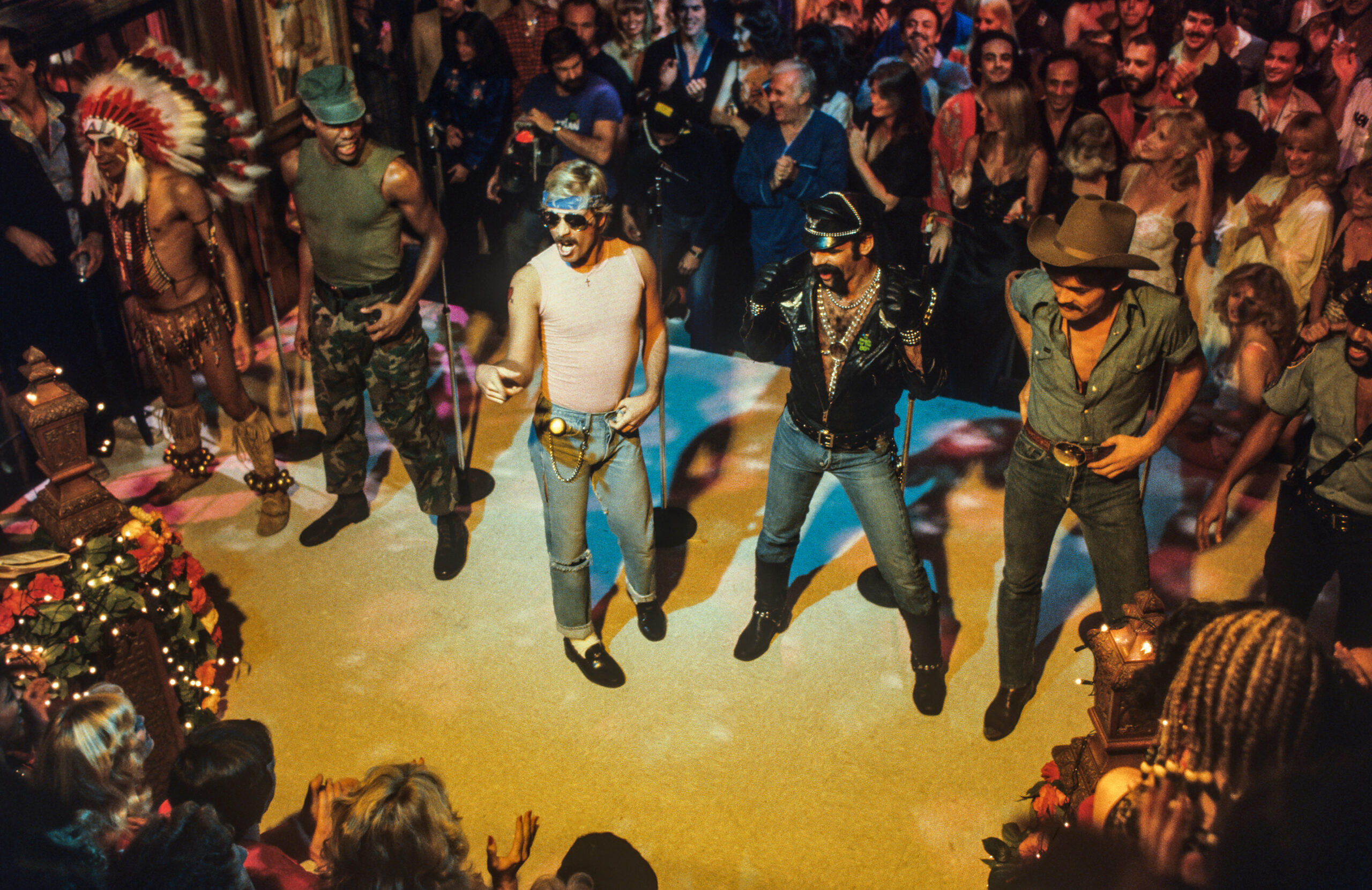
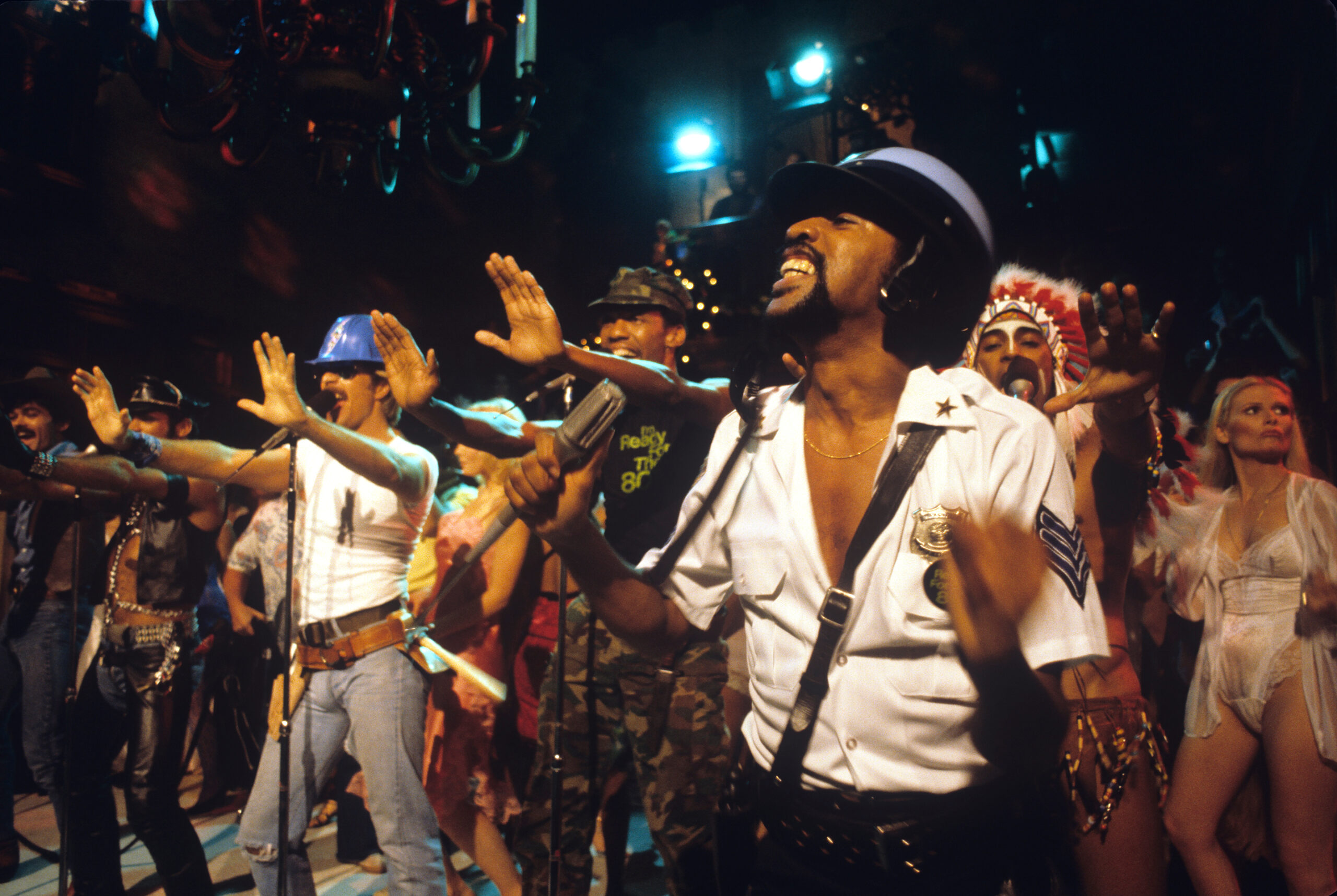
Inside the packed Great Hall of the Playboy Mansion, atop a stage washed in purple and yellow lights, six sex symbols shimmied and gyrated to a pulsing disco beat. Dressed in skintight costumes that left little to the imagination, they not only danced, they belted out tunes. But these seductive performers weren’t Centerfolds—they were the Village People, and they had brought their act to the hottest home in America.
It was the fall of 1979, and disco had reached its climax. Gloria Gaynor had released the splendid empowerment anthem “I Will Survive” the previous year, and Rod Stewart had the world asking, “Da Ya Think I’m Sexy?” Donna Summer was on top of the charts. Diana Ross, Sister Sledge and Chic were churning out indelible slices of sparkling dance music. And the Village People were at the height of their stardom.
It made sense, then, that when Hugh Hefner decided to throw a roller-disco pajama party on the posh grounds of the Playboy Mansion, the Village People would be tapped as the night’s musical guests.
Watching the bash, taped in October 1979 and aired the following month as an ABC prime-time special, feels like taking a madcap trip through a forgotten bit of Playboy history. Guests included a skate-happy James Caan, a tennis-playing Cheryl Tiegs and a smiling Patty Hearst.
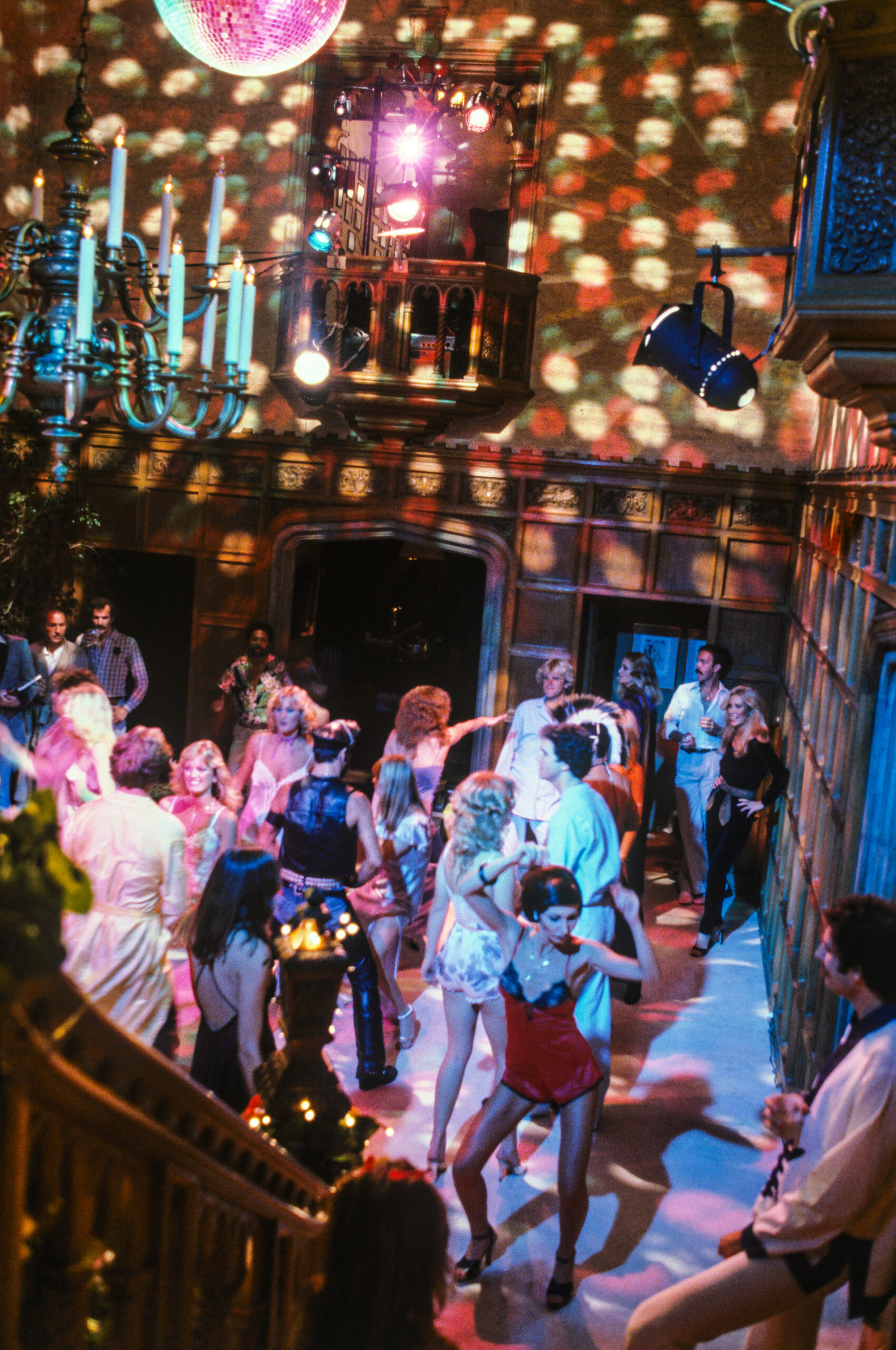
Hosted by the dashing Richard Dawson, the event was billed as a “wild all-night party of music, laughter and roller disco.” Naturally the camera gravitated toward the bevy of sun-kissed models that descended on the Mansion grounds during the first portion of the show, with long stretches of screen time dedicated to shots of scantily clad women dancing on skates or frolicking in the Grotto. Although the Village People were the main attraction, other entertainers also performed: Chuck Mangione was there to play the flugelhorn, and Wayland Flowers’s rowdy puppet Madame delivered unmannerly zingers throughout the program. Video footage of Playmate photo shoots—nothing too revealing for the ABC presentation—was also incorporated into the show.
Jazz, jokes and feminine beauty—standard fare for PLAYBOY. (“When Hef throws a party, he really throws a party,” Dawson says in one bit, paying more attention to the bikini-clad models than to the camera.)
But it is the Village People, grinding and slinking alongside Playmates as they perform two songs in the heart of hetero America, who steal the show. Considering the group was created foremost for men who found nirvana in gay clubs and certainly not in the world of PLAYBOY, the irony almost astonishes.
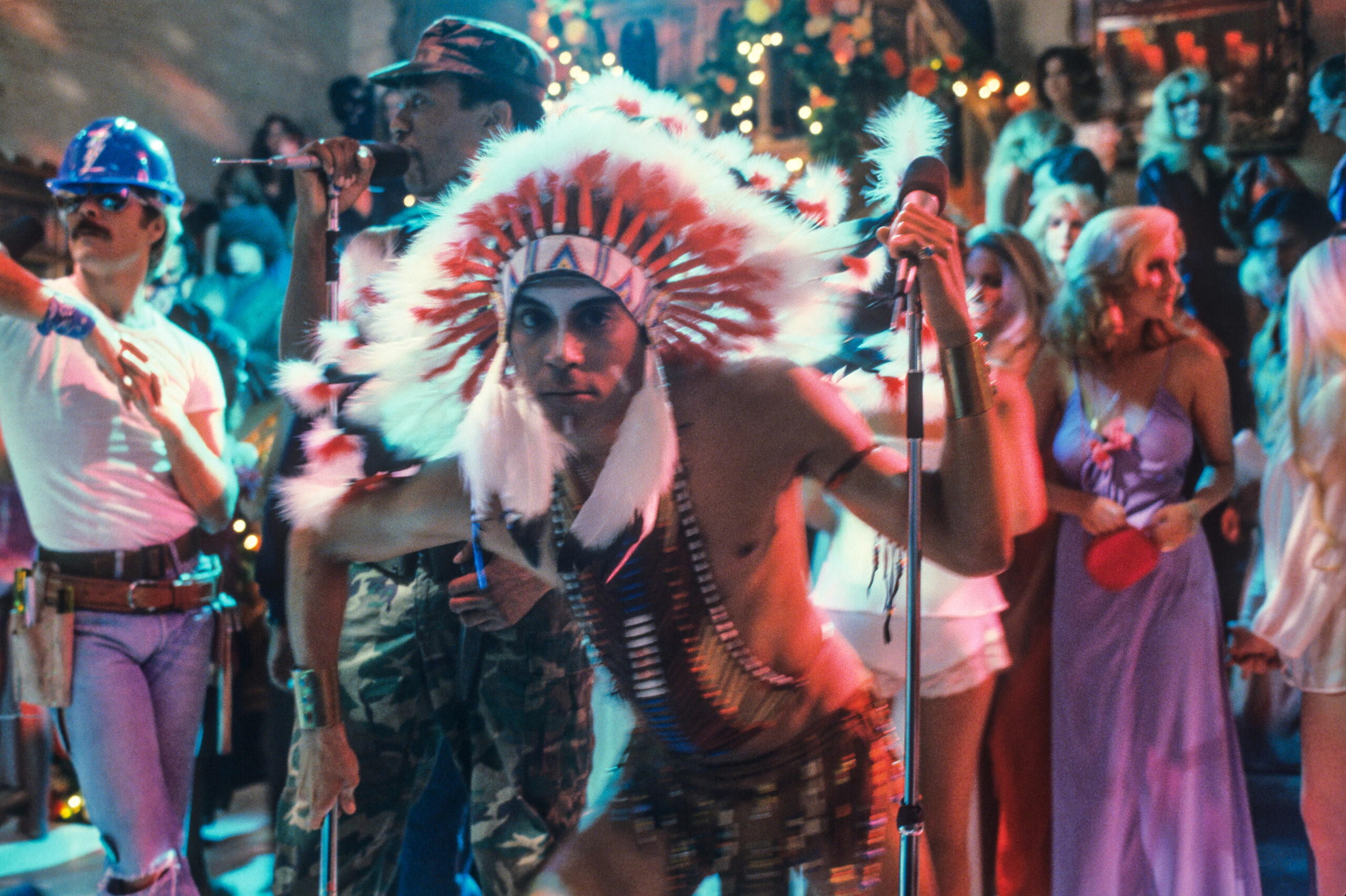
Hugh Hefner and the Village People didn’t target the same audiences, but both created—and catered to—male fantasies.
At the Playboy Mansion, eroticism and escapism coalesced to create an exhilarating fantasy land. Disco music had the power to harness those same forces and achieve exactly the same thing. Hugh Hefner and the Village People didn’t target identical audiences, but they both created and catered to male fantasies.
Everything about the Village People, from their image—exaggerated versions of masculine tropes—to the catchy, coded songs they recorded, was crafted through a queer lens. As the group’s co-founder and manager Jacques Morali told Rolling Stone in 1978 about his motivation for creating the disco act, “Gay people have no [musical group]…nobody to personalize the gay people, you know?”
Arriving at the dawn of the 1970s, disco helped define a time of emerging liberation for LGBTQ America. After decades of suppression and erasure, the 1969 Stonewall riots and the gay civil rights movement had ushered in an era of relative openness among queer people. And the slinky, blissful grooves emanating from the disco scene provided a ubiquitous soundtrack at gay clubs across the country—safe havens where men could feel free to explore their sexuality.
As the story goes, it was a gay club in Greenwich Village that sparked the vision for the Village People, a group concept conceived by Morali and his business partner, Henri Belolo. Casablanca Records signed off on the project even before the producers began to recruit members, outside of singer Victor Willis.
Although disco was the rage among gay men, it was a genre dominated by female vocalists. Morali and Belolo, French immigrants looking to cash in on this latest American music craze, shrewdly saw a niche that had yet to be exploited and cobbled together a group to attract a gay male audience. Appropriating straight American masculinity served a dual purpose: Morali knew that strong male images—a cowboy, Native American, cop, soldier (or sailor), construction worker, biker—would titillate gay men and appeal to a broader (straighter) audience unable to decipher the gay innuendoes and double entendres sprinkled throughout the music. Although, as John Rockwell wrote in The New York Times in 1979, “those in the know (any five-year-old with a brain) can pick up on their homosexual subtexts.”
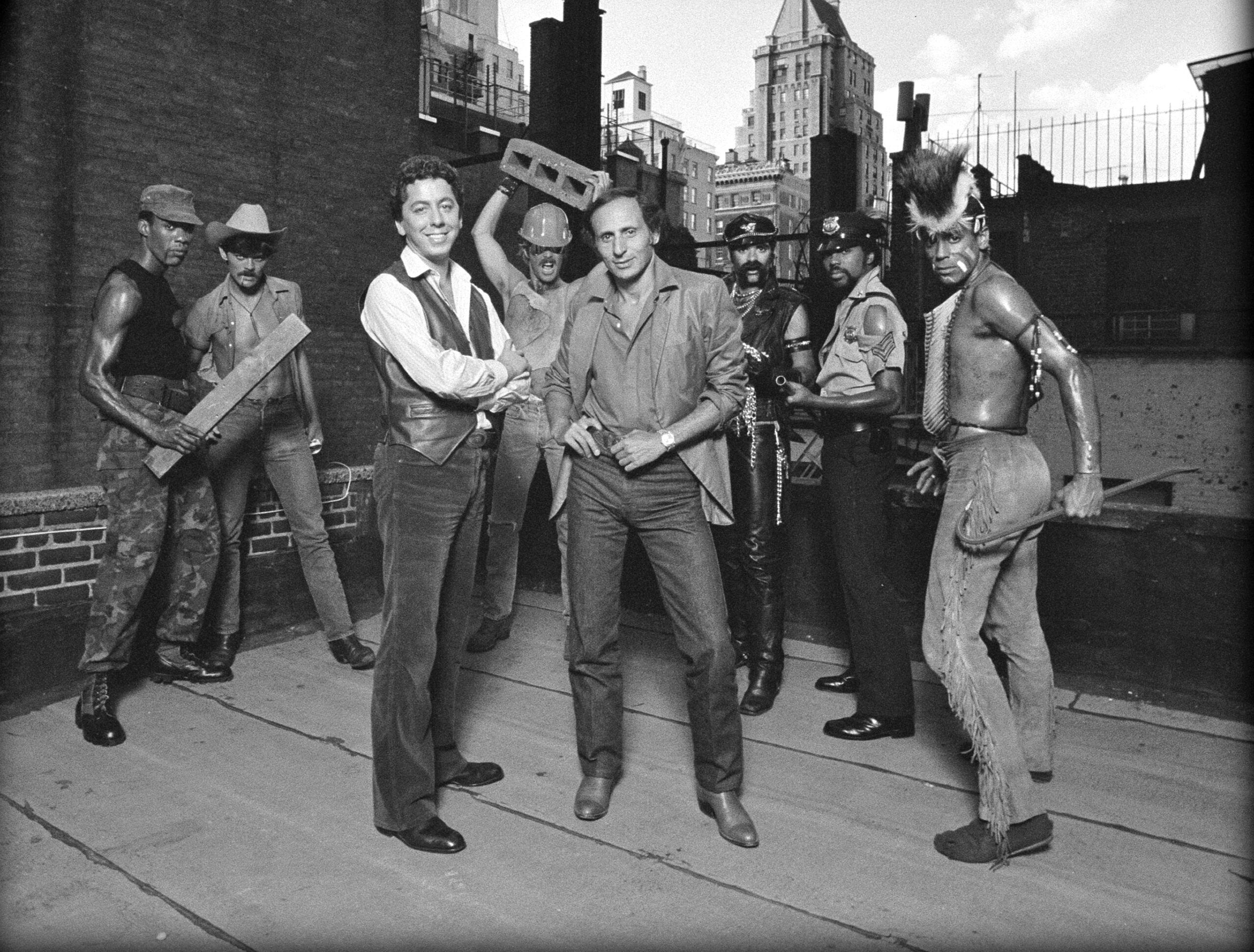
The Village People’s 1977 self-titled debut was so specifically gay, with songs about queer meccas such as San Francisco and Fire Island, that member David Hodo (the construction worker) once described it as “possibly the gayest album ever.” With their beefcake physiques, accentuated by costumes that displayed their bulging muscles, the Village People toyed with fantasy images to establish themselves as gay sex symbols—even if not every member identified as queer. They presented ideals that gay men could aspire to—the type of men they wanted to be, and the type of men they desired. The Advocate, the oldest gay magazine in America, declared the group “a godsend.”
By 1979, the Village People were in their prime. The sextet had become a global phenomenon after the campy “Y.M.C.A.” exploded on the pop charts, taking the group from a gay-club-circuit staple to an international crossover act in high demand. They toured North America, “Y.M.C.A.” went to number one in multiple countries, and a $20 million musical comedy featuring their songs (Can’t Stop the Music, a Razzie-award-winning flop) was released in June 1980. The Village People had become one of the hottest acts on the planet.
But then the group began to reverse course and rewrite their own narrative. Once open about the performers’ sexual identities, by 1980, Morali was downplaying their sexuality.
“Look, the Village People is the only group that is black, white, straight and gay,” Morali told PLAYBOY in a 1980 article in which he attempted to distance the group from any queer subtext. “They are successful because they represent many sides of America; because they are fun and sing happy songs,” he said. “They are very much gay-influenced.… But they are not a gay group. To say this will kill them!”
Yet at the Playboy Mansion in 1979, the Village People and their disco-fevered audience stood on the brink of monumental shifts that would forever change American culture. The death of disco at the turn of the 1980s gave way to dark years marked by Reaganomics, a devastating war on drugs and an AIDS epidemic that ravaged the same gay Edens the Village People sang about. It would be decades before a new era dawned for queer America: Today, medical advances have largely eradicated HIV’s status as a death sentence; gay couples can walk down the aisle and adopt children; trans rights are at the forefront of a national movement. Queer culture has permeated the mainstream, and artists no longer feel the same pressure to stifle their sexuality in order to grow their careers.
Perhaps Morali and the Village People could not have foreseen this moment, one in which equality is closer at hand than ever before—and one in which the group’s songs endure, beloved and enshrined in our musical history. But on that night 40 years ago, a leather daddy subversively sang to America about casual gay sex with a wink and a nod toward freedom. And PLAYBOY was happy to host.
Check Out Playboy’s Full Magazine Archive